 US
US





Treatment of Colorectal Cancer
Treatment of Colorectal Cancer
Colon cancer is the second most commonly occurring cancer in women, and the third most commonly occurring cancer in men, with over 1.9 million new cases worldwide in 2022. Of these 1.9 million cases of cancer in the colon, approximately 500,000 are located in the rectum, the lowest segment of the colon. The following information is specific to the treatment of rectal cancer.
Treatment of rectal cancer most often involves radiation and chemotherapy followed by surgical removal of some or all of the rectum. The colon is then reconnected to the remaining rectum or anus with surgical staples or sutures; this connection is called an anastomosis.
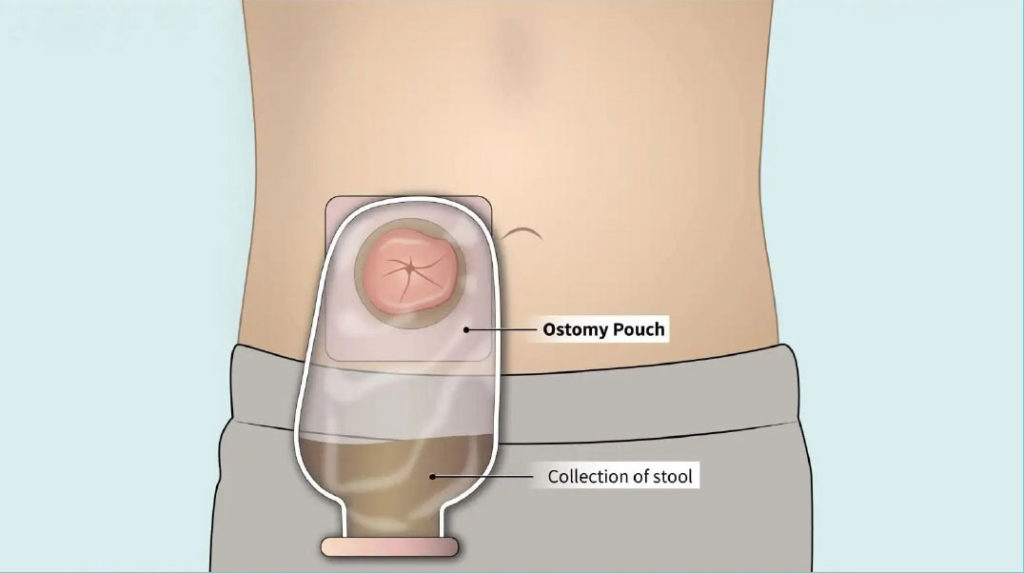
Because the risk of incomplete healing of the colon anastomosis is high, and the consequences could be dire, the surgeon may also create an ostomy (also called a stoma), which temporarily diverts the stool away from the healing anastomosis to the outside of the body and into an ostomy bag. Usually the ostomy is needed only until the rectum has healed, and then it can be reversed.
In this case, as the ostomy is intended to be temporary, the patient typically keeps the ostomy for approximately 2-6 months. However, the ostomy may be permanent, iIf the entire rectum is removed or other health problems prohibit the ostomy reversal procedure.
The eventual reversal of the ostomy requires another operation, with a second hospital stay and recovery period.
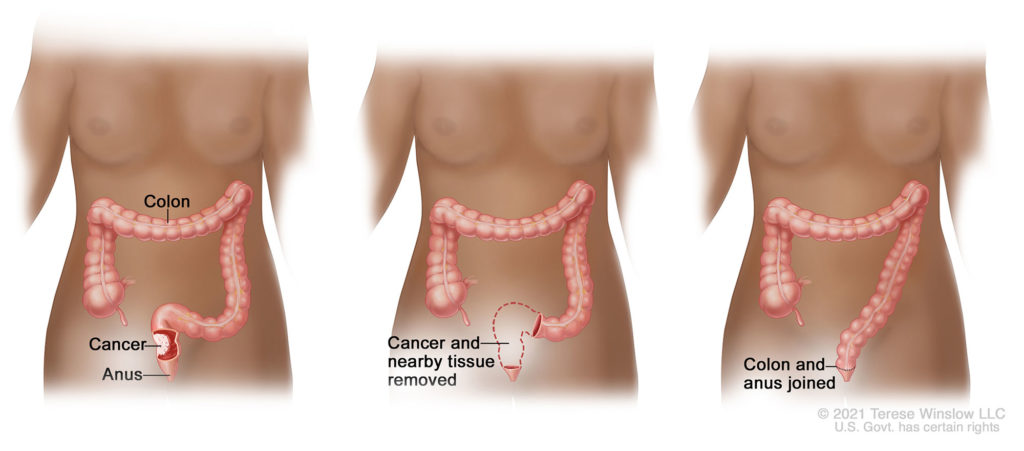
Resection of the Rectum with Anastomosis
As with any surgery, complications can develop. While an ostomy procedure after rectal resection surgery is the current standard of care to provide protection to the healing anastomosis, specific risks are associated with the ostomy operation. The most common of these complications may include:
- Dehydration
- Irritation and inflammation of the skin around the ostomy
- A hernia at the site of the ostomy
Additionally, complications may develop from the secondary surgery 2-6 months later to reverse the ostomy.
In addition to physical complications, ostomy patients may experience an impact to their quality of life, due to:
- Social isolation
- Reduced physical activity and/or intimacy
- Extended recovery after cancer surgery
- Added expense of ostomy supplies
About Colovac1
Colovac is a colorectal anastomosis protection device intended to reduce the contact of fecal content at the anastomotic site following colorectal surgery. The device is placed at the time of the rectal resection surgery and is fully reversible. Colovac is designed to remain in place for up to 12 days, until the body’s natural healing and tissue repair processes are complete in the majority of patients, after which it is removed during an endoscopic procedure similar to a colonoscopy, without the need for a second surgical intervention.
For the majority of patients, Colovac is expected to eliminate the need for a second surgery. This enables patients to resume normal activity after their cancer resection surgery without the stigma and complications associated with an ostomy procedure. Colovac is an investigational device, not currently available for sale. The safety and effectiveness/performance of Colovac is still being evaluated in clinical trials.

Rectal Cancer Treatment without Colovac
- Time to Full Recovery: 2-6 months
- 2 Surgeries, 2 Hospital Stays
- Risk of Complications
- 2 Surgeries Under Anesthesia
- Additional Incisions
- Potential Ostomy Complications such as dehydration from high-output stoma2, ileus3, stomal prolapse3,4, wound complications3, parastomal hernia4, necrosis4, stenosis4, and peritonitis4. For a complete list of potential complications, speak with your doctor.
- Risk of Permanent Ostomy
- Quality of Life Due to Ostomy Bag
- Potential Social Isolation
- Impact on Physical Activity and Intimacy
- Added Expense of Ostomy Supplies
- Cost to Patient and Health Care System
- Multiple Surgeries and Hospital Stays
- Time to Full Recovery

Rectal Cancer Treatment with Colovac
- Time to Full Recovery: as little as 2 weeks
- Only 1 Surgery and Hospital Stay for the Majority of Patients2
- Risk of Complications
- Potential Colovac Related Complications such as pelvic abscess or collection, anastomosis leakage, fistula or dehiscence, peritonitis, sepsis, colon perforation, obturation or occlusion, and undesirable side-effects associated with delayed ostomy creation. For a complete list of potential complications, speak with your doctor.
- Single Surgery under Anesthesia2
- No Ostomy Complications
- Patient Satisfaction
- No Ostomy Bag, No Lifestyle Changes for the Majority of Patients2
- Faster Return to Normal Life
- Decreased Cost to Patient and Health Care System6
- Single Surgery and Hospital Stay for the Majority of Patients2
- Reduced Time to Full Recovery
1 Colovac is an investigational device limited by Federal (United States) law to investigational use. Therefore, the risks and benefits have not been assessed by the US Food and Drug Administration (FDA).
2 For a small number of patients, the anastomosis will not be fully healed when the Colovac Device is removed and conversion to an ostomy will be required. Although they will have the same ostomy creation and reversal procedures as patients who did not receive Colovac, they will have an additional exposure to anesthesia and may experience an undesirable side-effect associated with delayed ostomy creation.
3 Waterland P, Goonetilleke K, Naumann DN, Sutcliff M, Soliman F. Defunctioning Ileostomy Reversal Rates and Reasons for Delayed Reversal: Does Delay Impact on Complications of Ileostomy Reversal? A Study of 170 Defunctioning Ileostomies. J Clin Med Res. 2015;7(9):685‐689. doi:10.14740/jocmr2150w
4 Yin, T.C., et al., Early closure of defunctioning stoma increases complications related to stoma closure after concurrent chemoradiotherapy and low anterior resection in patients with rectal cancer. World J Surg Oncol, 2017. 15(1): p. 80.
5 Wu X 2018 Wu X, Lin G, Qiu H, Xiao Y, Wu B, Zhong M. Loop ostomy following laparoscopic low anterior resection for rectal cancer after neoadjuvant chemoradiotherapy. Eur J Med Res. 2018;23(1):24. Published 2018 May 22. doi:10.1186/s40001-018-0325-x
6Surgical Endoscopy, 14 August 2023, Cost associated with diverting ostomy after rectal cancer surgery: a transnational analysis.
SAFE-3CV Colovac and SmartVac Clinical Trial
The Colovac and SmartVac devices are being evaluated in the US as an alternative to ostomy for patients having low anterior rectal surgery to remove colorectal cancer.
What is the SAFE-3CV clinical study?
- SAFE-3CV is a clinical study that will enroll patients undergoing rectal cancer surgery who would normally also undergo a diverting ostomy procedure as part of their care. The study participants will receive the Colovac device as an alternative to diverting ostomy. This study is currently enrolling up to 120 patients in the U.S. and Europe.
What is the goal of SAFE-3CV?
- The overall goal of the SAFE-3CV study is to validate the Colovac device as a safe and effective alternative to diverting ostomy. The information collected will be compared to an earlier study that assessed the rate of complications associated with diverting ostomy, the current standard-of-care surgery for rectal cancer.
Why should a patient consider participating in SAFE-3CV?
- The Colovac device may help to protect the healing of the anastomosis and may reduce the need for an ostomy. Greater than 80% of patients who participated in prior studies of the Colovac device avoided an ostomy.
- Patients who successfully avoid an ostomy will also avoid ostomy complications, a second surgical procedure to reverse the ostomy, and a second hospital stay.
- Participation in the study will provide patients with a more rigorous monitoring of their post-surgical healing status, as compared to the current standard of-care.
- The schedule of follow-up visits is consistent with the normal follow-up associated with cancer surgery care.
- There is no additional cost to the patient to participate in the SAFE-3CV study. Additionally, you may be compensated for completion of the required follow-up steps.
- Patients who participate are contributing to the body of evidence that may support approval of the Colovac device and allow future patients to avoid an ostomy
The Institutional Review Board of each participating Clinical Study Site has assessed the risks associated with the SAFE-3CV study, and ensured that appropriate steps have been taken to protect the rights and welfare of people participating in the study.
You may be eligible to participate in the SAFE-3CV study if you;
- Are 22 years old or older
- Are undergoing a rectal cancer resection with a planned diverting ostomy
The following clinical partners are currently enrolling patients. Please contact the surgeon investigator nearest you to discuss your eligibility for the SAFE-3CV study, potential benefits, and possible risks.
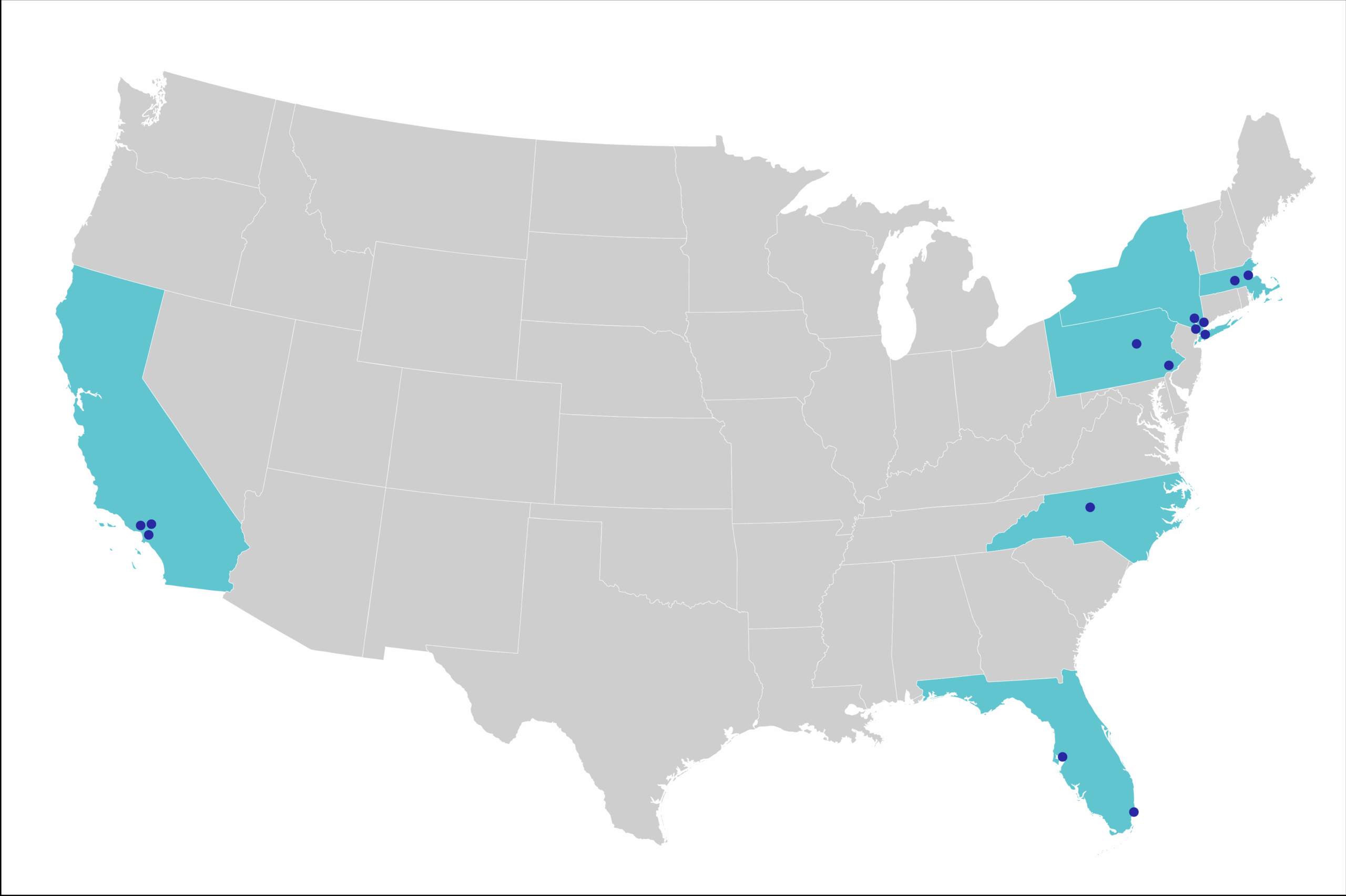
Clinical Partners:
United States
California
Cedars-Sinai Medical Center
8700 Beverly Boulevard Los Angeles, CA 90048

CONTACT: Gayane Ovsepyan
Research Project Manager
[email protected]
(310) 289-9224
Kaiser Permanente Los Angeles Medical Center
4867 W Sunset Boulevard Los Angeles, CA 90027
 Elisabeth McLemore, MD (Bio)
CONTACT: Crystal Khin
Research Associate II
[email protected]
(323) 783-5475
Keck Medicine of USC
1441 Eastlake Ave, Suite 7418 Los Angeles, CA 90033

Florida
Tampa General Hospital
1 Tampa General Circle Tampa, FL 33606
 Jorge Marcet, MD (Bio)
CONTACT: Avennette Pinto
Sr. Clinical Research Associate
[email protected]
(813) 505-4787
University of Miami Medical Center
1295 NW 14th Street Building Suite Miami, FL 33125
 Nivedh Paluvoi, MD (Bio)
CONTACT: Emmanuelle Simonet
Sr. Manager, Research Support
[email protected]
(305) 243-7298
Pennsylvania
Geisinger Medical Center
Danville, PA
 Christopher Buzas, DO (Bio)
CONTACT: Kay Reiner
Clinical Research Coordinator III
[email protected]
(570) 214-5421
Main Line Health System
100 Lancaster Ave Wynnewood, PA 19096
 John Marks, MD (Bio)
CONTACT: Selena Dillman
Oncology Clinical Research Coordinator I
[email protected]
More
New York
Lenox Hill Hospital/Northwell Health
1120 Lexington Avenue, Floor 2 New York, NY 10075
 Joseph Martz, MD (Bio)
CONTACT: Jonathan Gruberg
Clinical Research Coordinator
[email protected]
(212) 434-4350
Maimonides Medical Center
745 64th St., 2nd floor Brooklyn, NY 11220
 Rebecca Rhee, MD (Bio)
CONTACT: Gene Sobol
Director, Performance Improvement
[email protected]
(718) 283-7926
Mount Sinai Hospital
5 E 98th St 14th Floor, New York, NY 10029
 Patricia Sylla, MD (Bio)
CONTACT: Roxanne Mistry
Clinical Research Coordinator I
[email protected]
(212) 241-0492
North Shore University Hospital
300 Community Drive Manhasset, NY 11030
 Marc Greenwald, MD (Bio)
CONTACT: Tabetha Garver-Mosher
Clinical Research Coordinator
[email protected]
Massachusetts
Boston Medical Center
1 Boston Medical Center Place Boston, MA 02118
 Jennifer Davids, MD (Bio)
CONTACT: Connor M. Roddy
Research Coordinator
[email protected]
(617) 414-8092
UMASS Memorial Medical Center
67 Belmont St, Suite 201 Worcester, MA 01610
 Justin Maykel, MD (Bio)
CONTACT: Rafael Fernandes
Clinical Research Coordinator II
[email protected]
(774) 455-4838
North Carolina
Novant Health
Clemmons, NC
 David Hiller, MD (Bio)
CONTACT: Sabrina Bethea
Clinical Research Coordinator II
[email protected]
(336) 718-6031
1 Colovac and SmartVac are investigational devices limited by Federal (United States) law to investigational use.